Cleartrace—Designing Clarity into Energy & REC Systems
Energy tracking and certificate provenance for utilities and enterprise buyers.
No 1Context & Product Reality
A mission-critical system buried in operational complexity.
Cleartrace builds software for utilities and corporations to track energy generation and manage renewable energy certificates (RECs) across their full lifecycle — from creation and allocation to transfer and retirement.
The product operates in a high-stakes environment:
• Regulatory and compliance pressure
• Multiple stakeholder types with different mental models
• Large volumes of temporal, transactional energy data
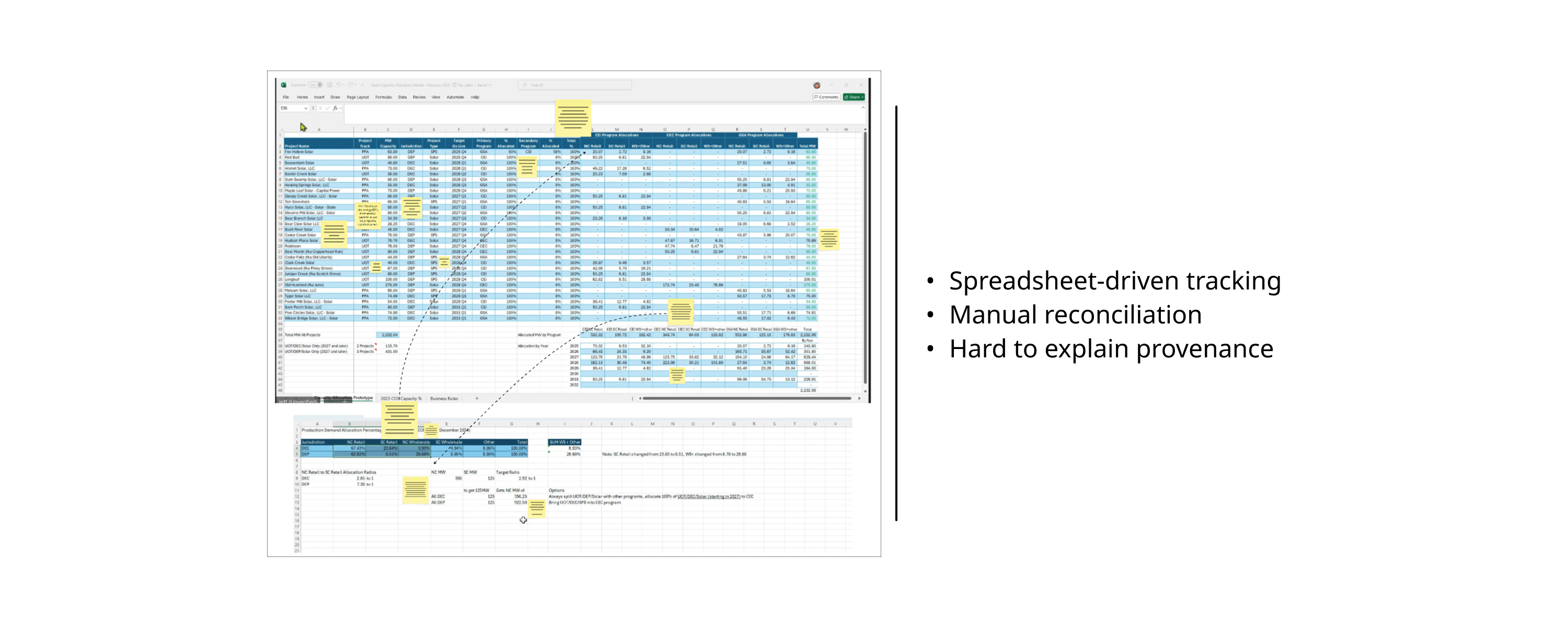
Before meaningful UX intervention, much of this complexity was handled through manual spreadsheets and ad-hoc processes, making traceability, auditing, and explanation difficult.
No 2My Role & Engagement Model
Staff Product Designer — Architecture & Operational Multiplier
As the design lead for Cleartrace’s core energy tracking platform, I operated across the full product lifecycle, from initial system modeling to high-fidelity delivery.
Beyond shipping features, I was responsible for:
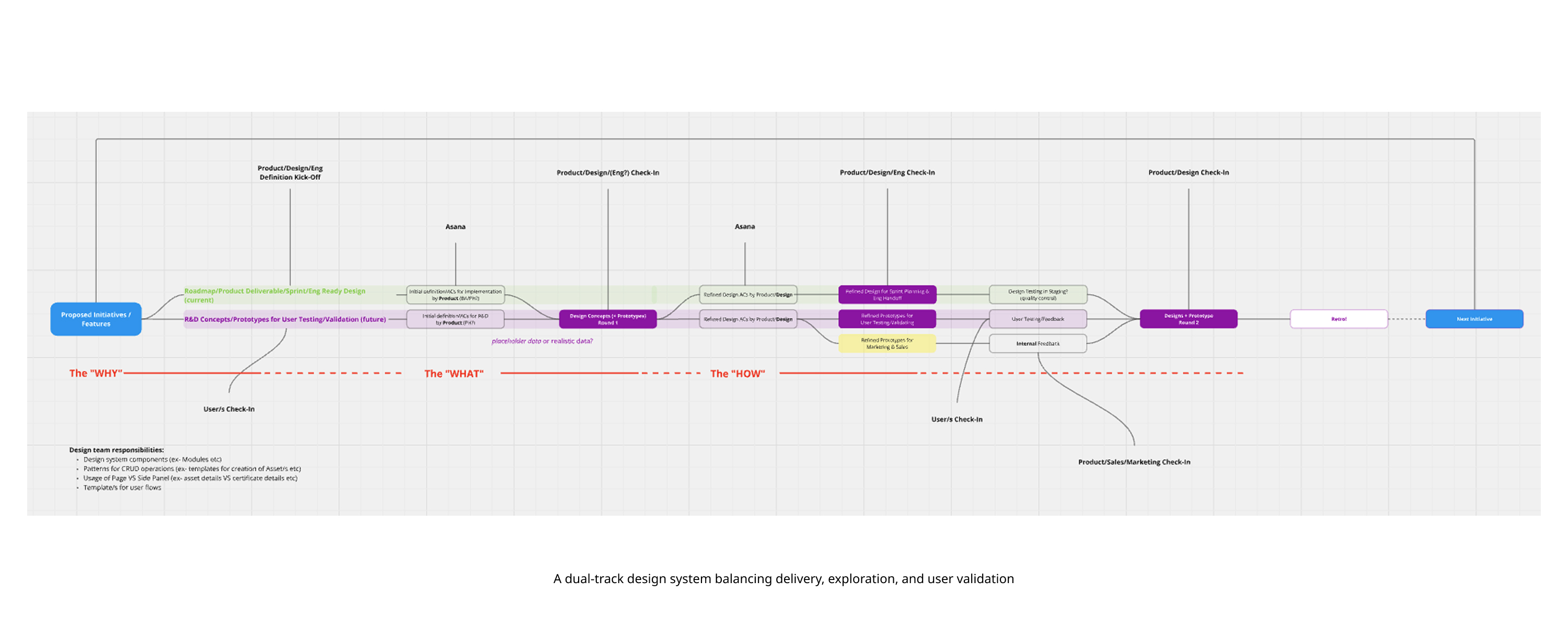
• Establishing the "Dual-Track" Model: Running discovery for future energy markets while unblocking engineering on current sprint cycles.
• Operationalizing AI: Integrating LLMs into our research and documentation workflows to reduce cycle times.
• Cross-Functional Alignment: Bridging the gap between complex data science outputs and actionable executive dashboards.
No 3Core Problem Space
When complex data lacks a shared mental model
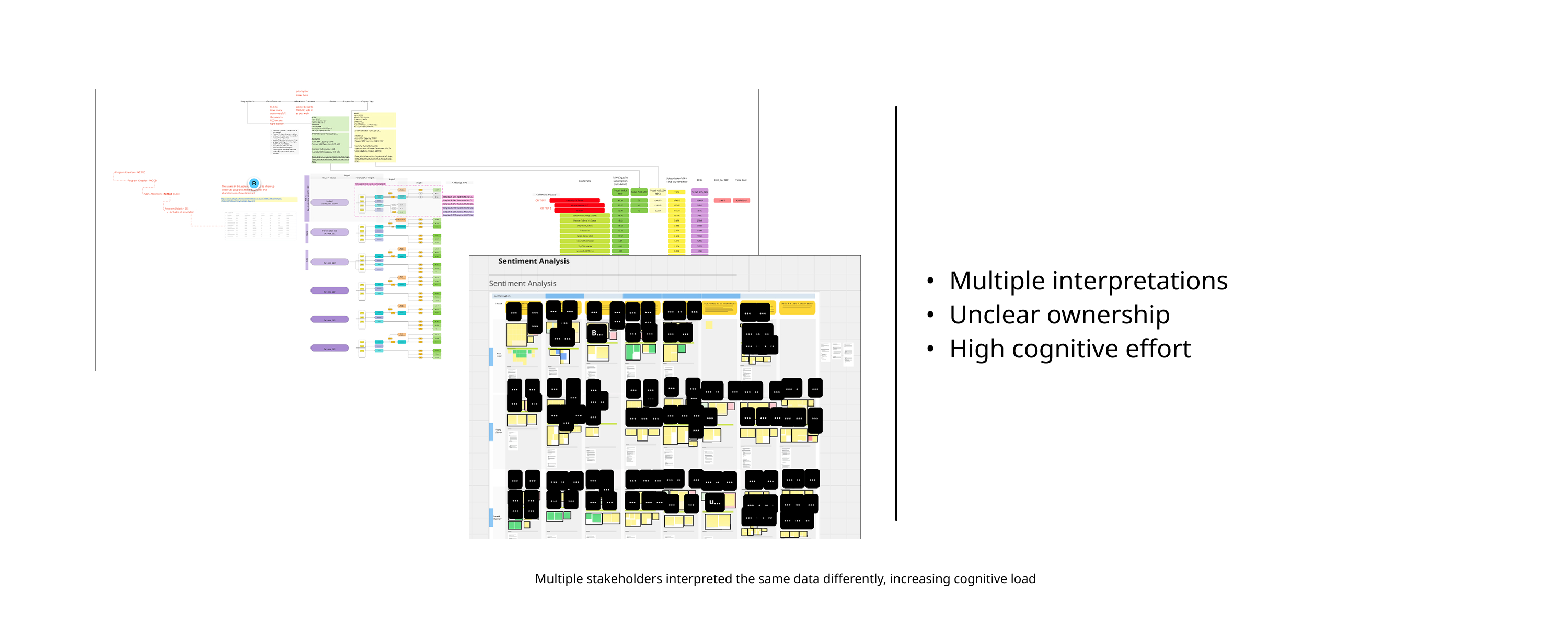
The core challenge wasn’t UI polish — it was cognitive load.
Utilities and enterprise buyers needed to answer questions like:
• Where did this energy come from?
• Which certificates are tied to which assets?
• What’s been claimed, transferred, or retired?
• Can I trust this data during audits?
Without a clear structural model, users struggled to interpret ownership, provenance, and compliance status — even when the data technically existed.
No 4Research & Insight Synthesis
Grounding design in real operational workflows
The core challenge wasn’t UI polish — it was cognitive load.
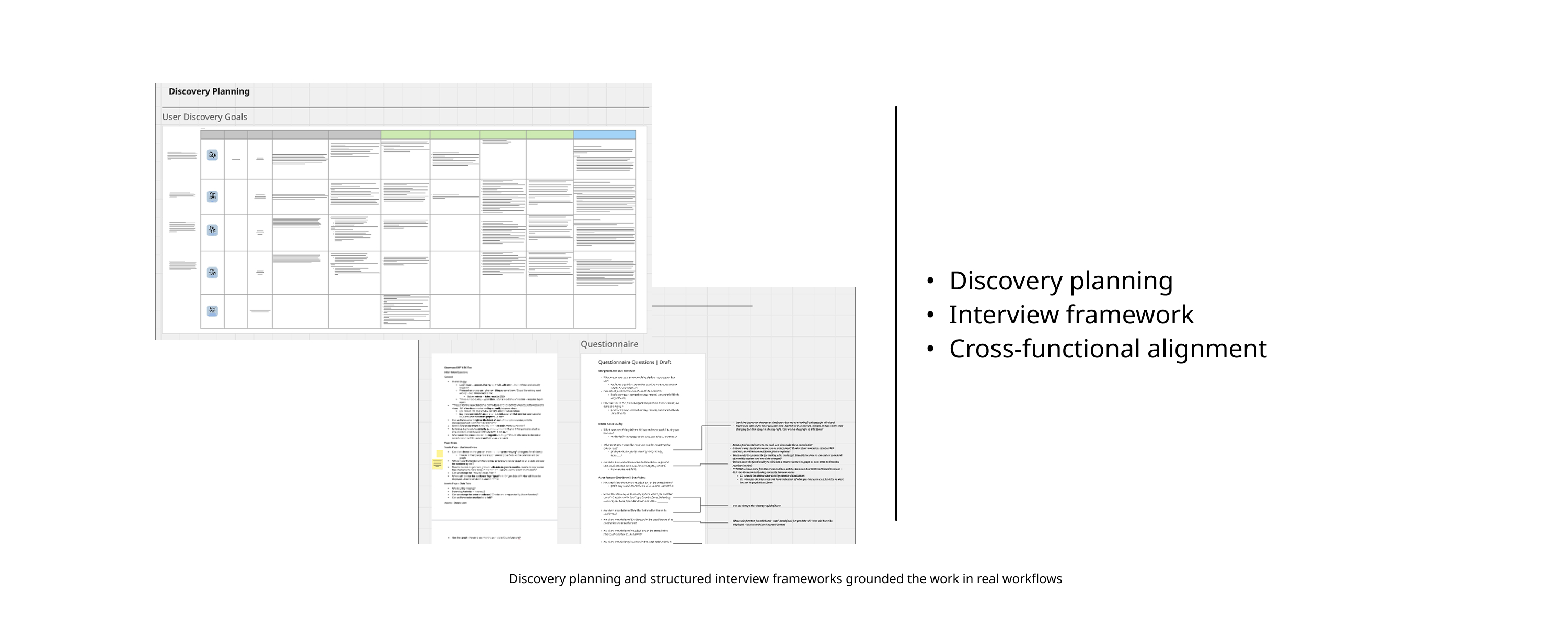
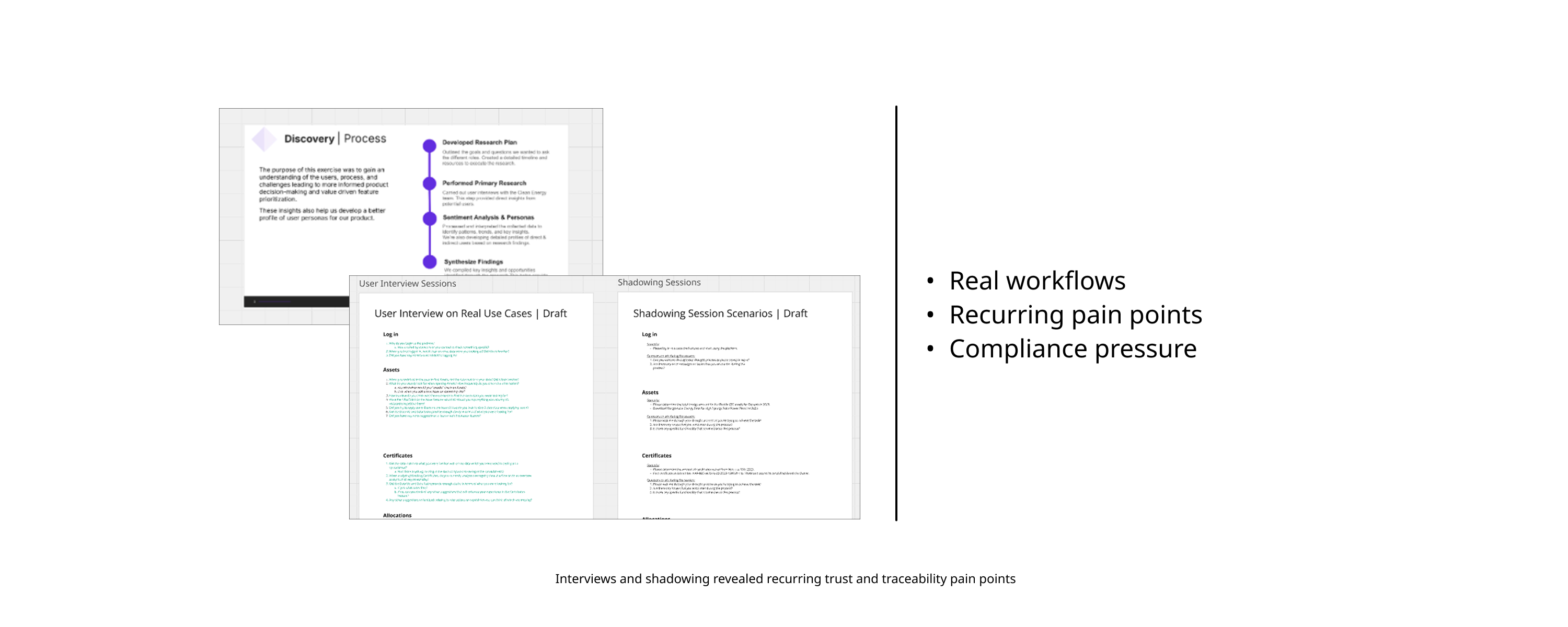
I conducted user interviews and shadowing sessions with utilities and corporate users to understand how energy and certificates were actually tracked day-to-day.
Research artifacts included:
• Interview notes and sentiment analysis
• Shadowing real REC management workflows
• Use-case documentation across compliance and voluntary programs
This surfaced consistent pain points around trust, explainability, and traceability, regardless of user role.
No 5From Journeys to Flows (AI-Assisted)
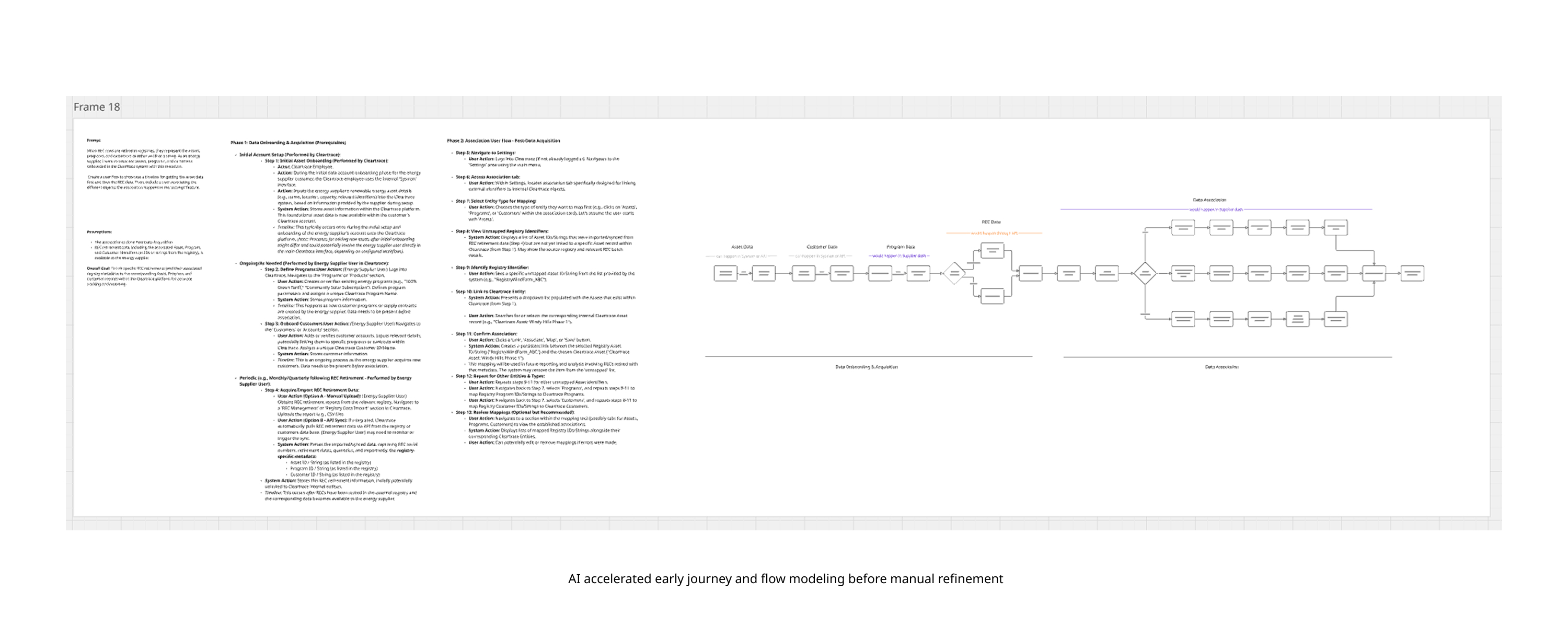
The AI-Augmented Workflow: 20h of Research → 2.5h of Synthesis
To handle the immense volume of regulatory and technical data, I pioneered an AI-assisted design process using Claude, Gemini, and Miro AI.
• Synthesis: Fed raw interview transcripts into Gemini to identify 12+ recurring friction points in REC management.
• Structure: Used Miro AI to generate initial logic flows, which I then refined manually for regulatory edge cases.
• Speed: This workflow allowed us to move from "Ambiguity" to "Stakeholder Alignment" 8x faster than traditional manual mapping.
No 6Structuring Complexity with OOUX
Applying Object-Oriented UX to energy data
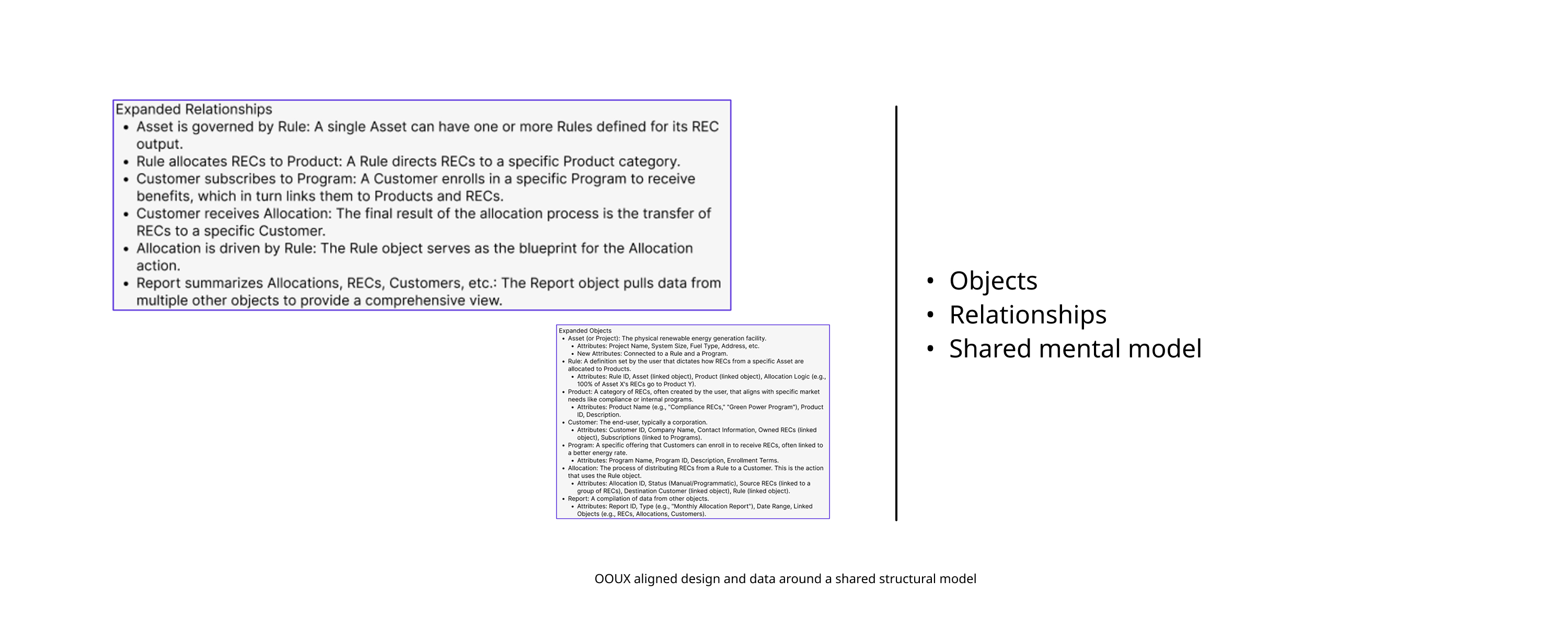
To stabilize both the UI and the underlying mental model, I applied Object-Oriented UX (OOUX).
Core objects included:
• Assets
• Certificates
• Programs
• Customers
By defining objects, attributes, relationships, and actions, we aligned design, data, and engineering around a shared structural model — reducing ambiguity and making the system more predictable.
No 7Prototyping for Delivery and Sales
Prototypes as alignment tools, not just visuals
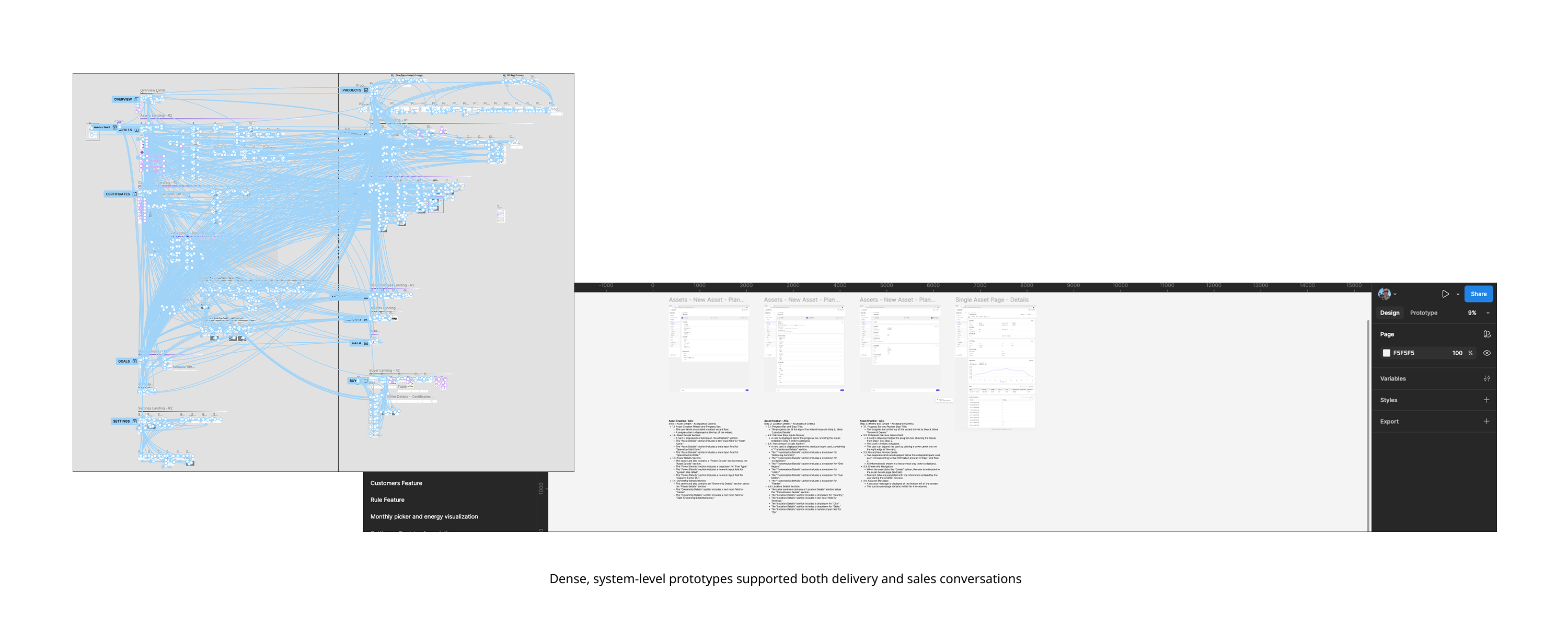
I created two parallel prototype tracks:
• Engineering-ready prototypes with clear acceptance criteria
• Clickable demo prototypes for sales and stakeholder conversations
This approach:
• Reduced sprint ambiguity
• Improved cross-team alignment
• Enabled faster validation with users and internal teams
The prototypes became a shared language across design, product, engineering, and sales.
No 8Final Product Outcomes
Making energy and certificates legible
The final designs focused on clarity over novelty.
Key outcomes included:
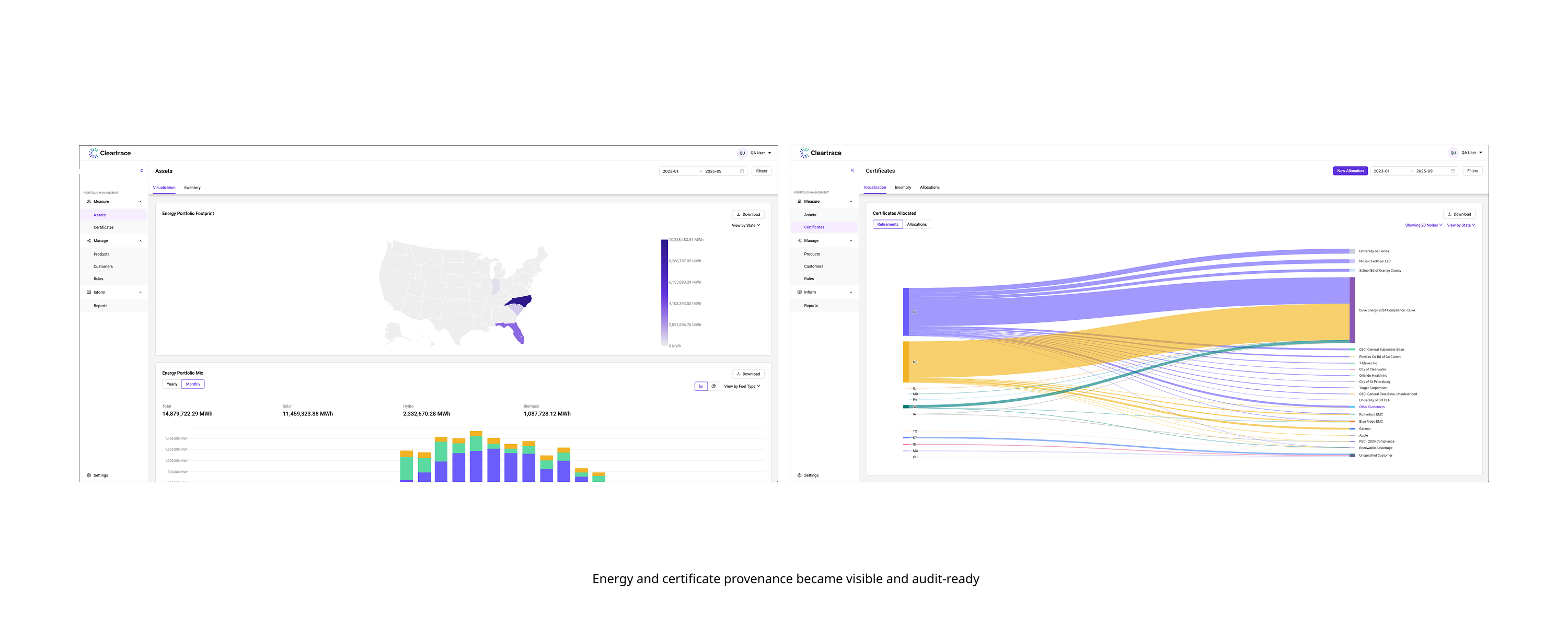
• A redesigned Assets landing page
• A Certificates experience that visualized provenance
• A Sankey diagram showing how energy flowed through programs and customers
Users could now clearly see where energy originated, how it was allocated, and what certificates were associated — supporting both compliance and voluntary reporting needs.
No 9Impact & Results
Measuring the Multiplier Effect
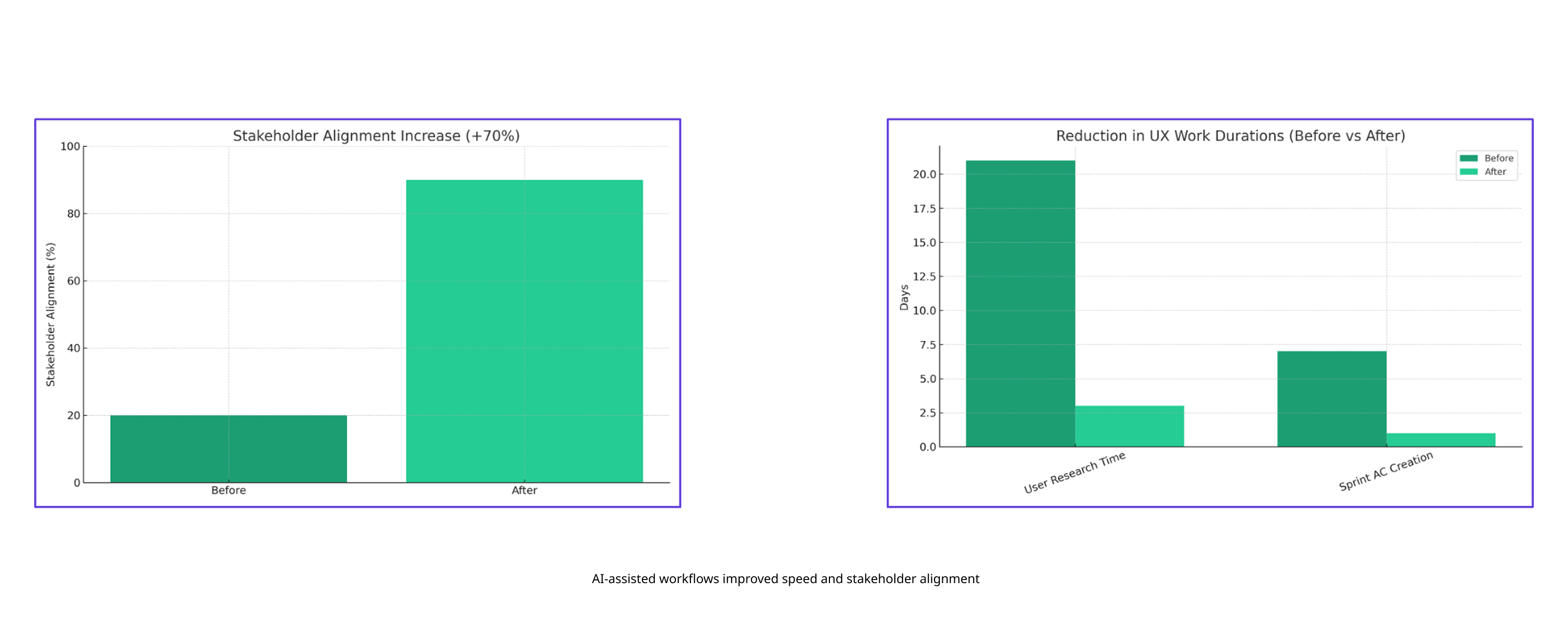
This engagement proved that strong design systems and AI-augmented workflows drive business velocity:
• +70% Stakeholder Buy-in: High-fidelity conceptual prototypes were used to secure key utility partnerships.
• 93% Reduction in Documentation Time: Automated the generation of technical acceptance criteria (ACs), moving from 7.5 hours per epic to just 30 minutes.
• Unified Mental Model: OOUX implementation reduced engineering rework by ensuring data schemas and UI components were perfectly synced.
No 10What This Demonstrates
Designing systems, not just screens
This project demonstrates my ability to:
• Design for complex, regulated domains
Dual-track protects delivery while exploring future complexity
• Use AI responsibly to accelerate UX workflows
Research + synthesis + validation loops clearly embedded
• Align data, design, and engineering through shared models
Asana, research, design, ACs all connected
• Translate ambiguity into scalable systems
WHY → WHAT → HOW is the definition of ambiguity → clarity
• Operate at a Staff-level scope across teams and timelines
Only senior designers model process, not just outputs
Clarity is the product.