AI-Assisted UX Explorations
Structured UX discovery using AI as a support layer — focused on safety, trust, and decision clarity.
No 1Intro
I’m exploring how AI can support UX and product design without replacing human judgment.
Rather than treating AI as a shortcut to UI, I’m using it as a thinking and critique layer — to surface edge cases earlier, structure complex problems faster, and improve clarity in the design process.
No 2Experiments
These experiments focus on:
• Using AI to explore and stress-test user flows and product logic
• Identifying trust, safety, and usability risks earlier in the process
• Comparing outputs from different AI models to avoid bias or tunnel vision
• Documenting decisions in a way that remains readable and explainable
No 3Featured Exploration
Motorcycle Riding Compatibility & Safety—UX Exploration
This exploration uses a hypothetical motorcycle riding buddies app as a test case.
The goal was not to design a new product, but to examine how compatibility, safety, and social trust can be structured more clearly in social matching platforms — especially in contexts involving real-world risk.
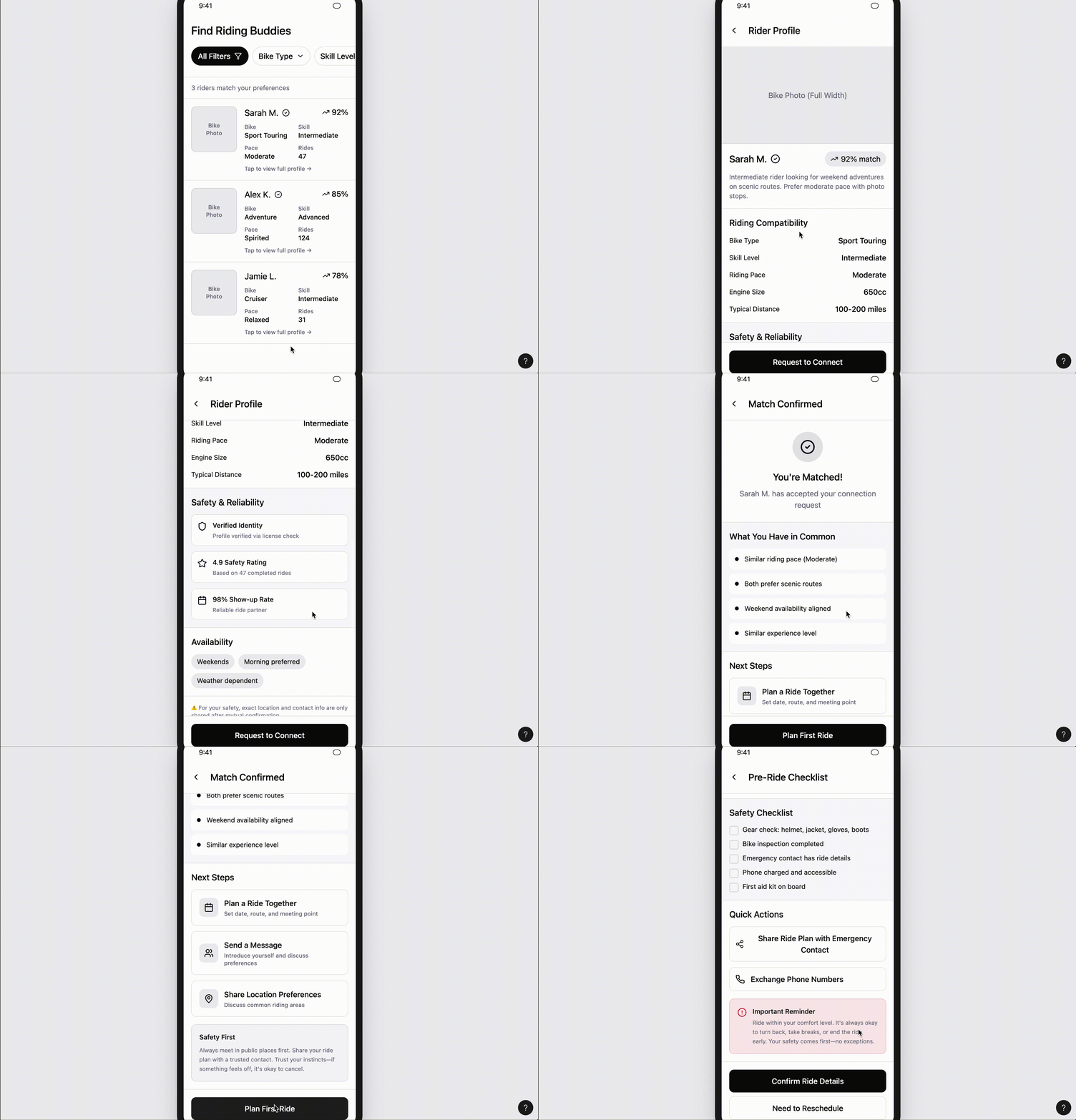
No 4Wireframe Prototype
Low-fidelity wireframes created to test rider discovery, compatibility signals, and pre-ride confirmation logic.
Visual polish is intentionally minimized to focus on structure and decisions.
No 5 System Snapshots
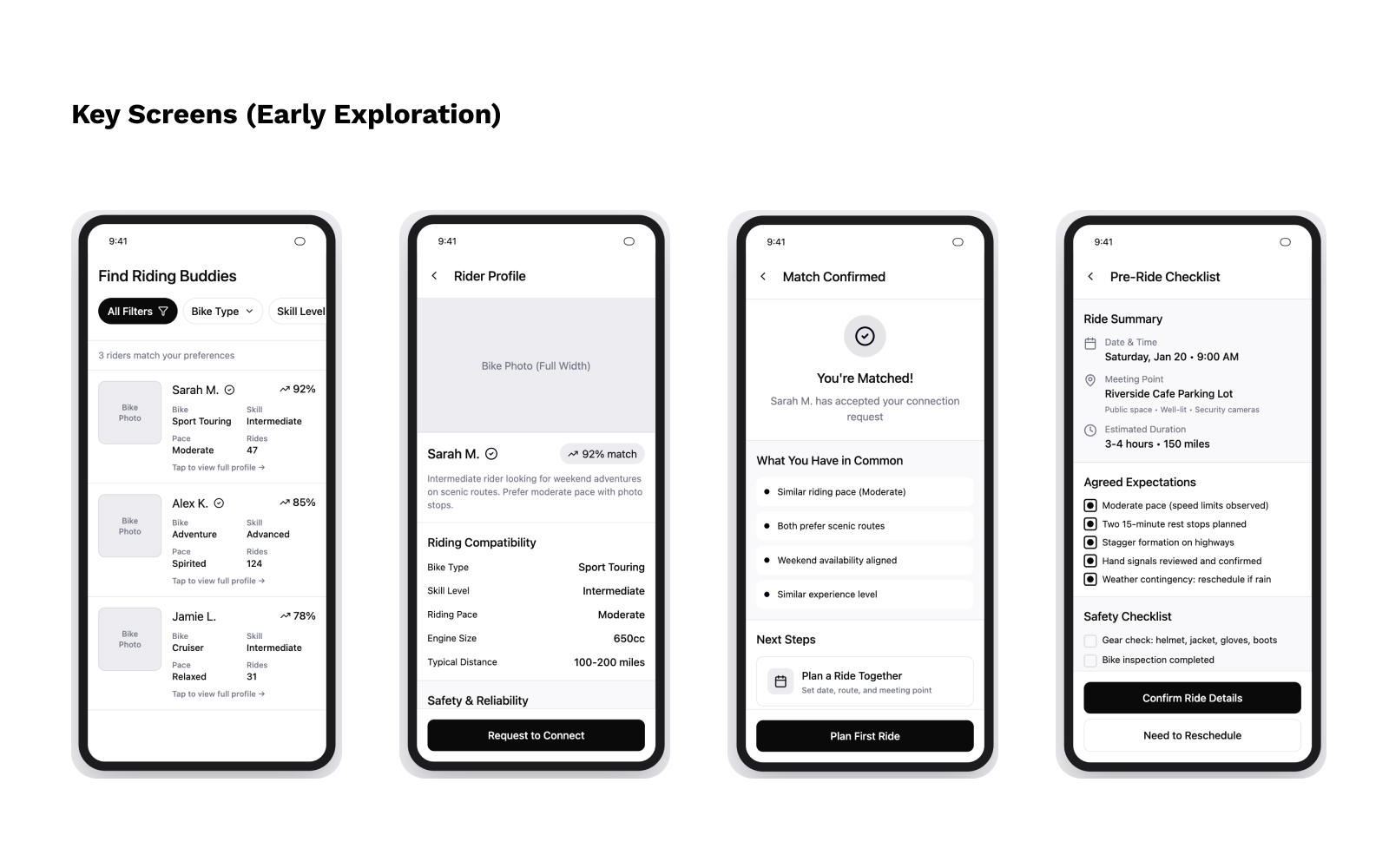
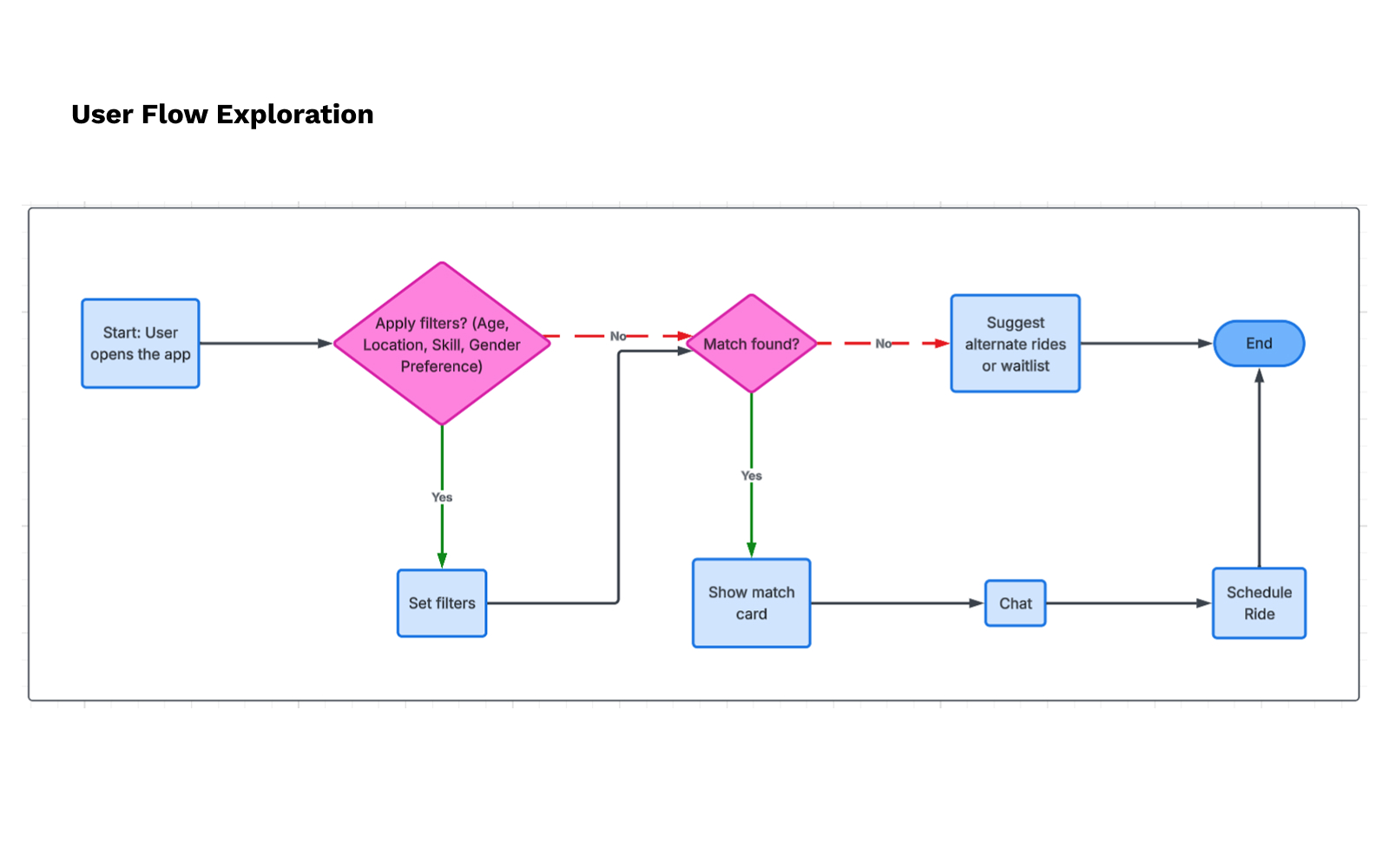
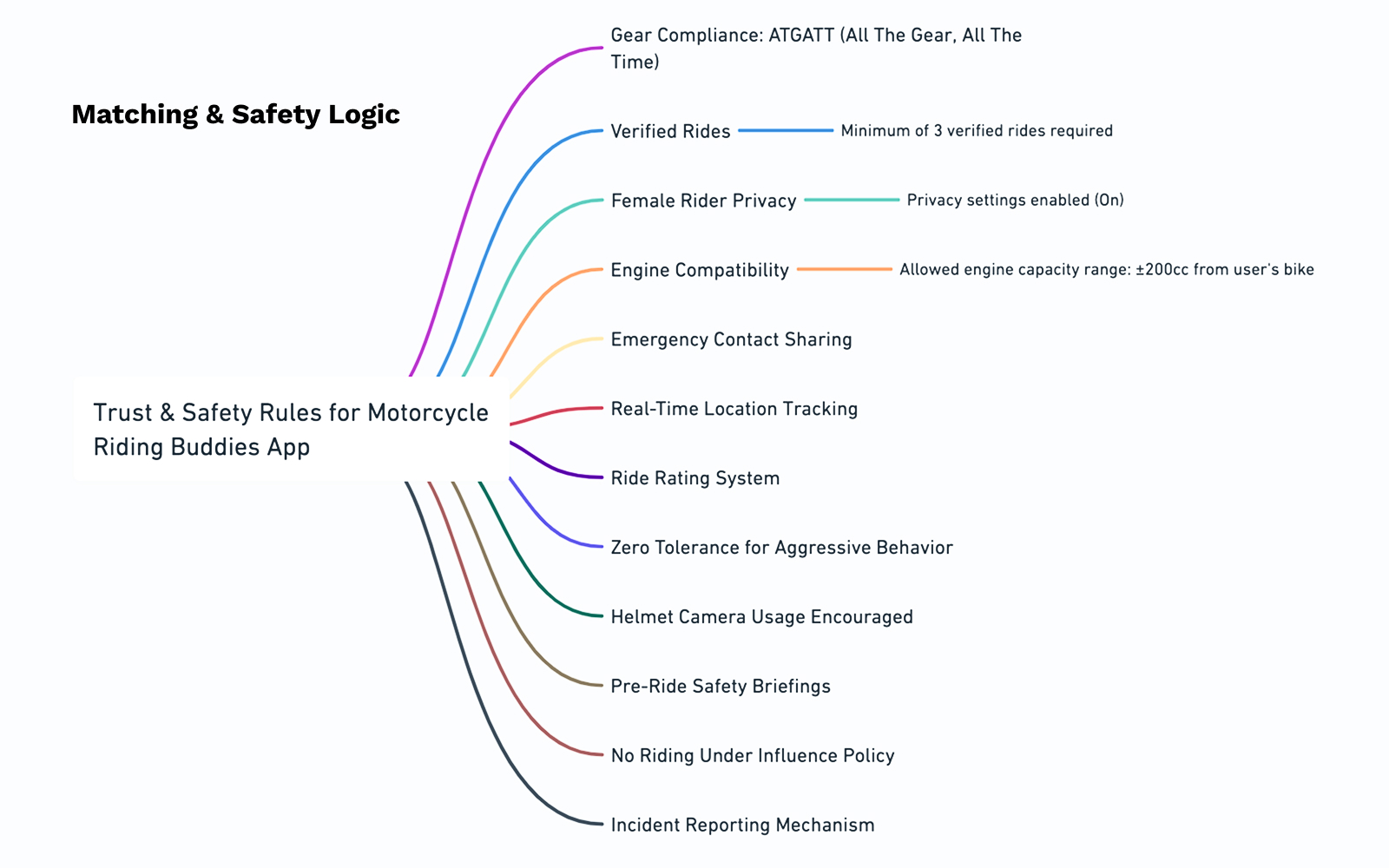
A small set of visual artifacts showing how flows, logic, and constraints were explored before converging on final UX decisions.
No 6Behind the Process
This project is supported by documented exploration, tradeoffs, and decision-making.
I’ve made a condensed set of process notes available for those interested in how AI was used to assist early UX thinking — including prompts, system critiques, and how final decisions were made.
These notes are intentionally raw and selective, shared to demonstrate reasoning rather than polish.
View process notes in Notion