Amazon Music—Independent UX Audit
Independent UX audit of Amazon Music focused on predictability, Prime tier clarity, and habit formation.
No 1Behavioral Problem
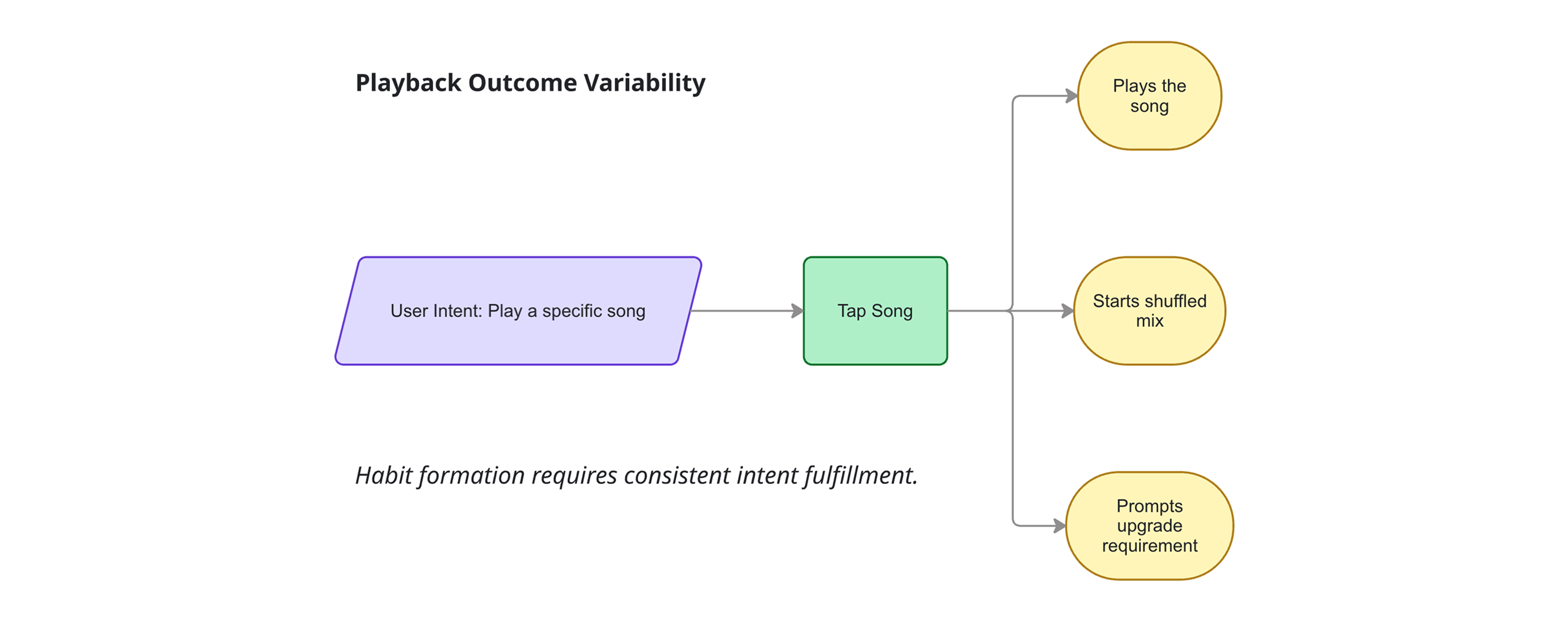
Prime members cannot predict what will happen when they press Play in Amazon Music.
The same action may play the selected song, start a shuffled mix, or surface an Unlimited upgrade prompt.
Because intent does not consistently map to outcome, users cannot form the simple habit: “Tap play → get what I expect.”
Without behavioral reliability, Amazon Music struggles to become the default casual listening app for Prime members.
No 2Behavioral Benchmarks
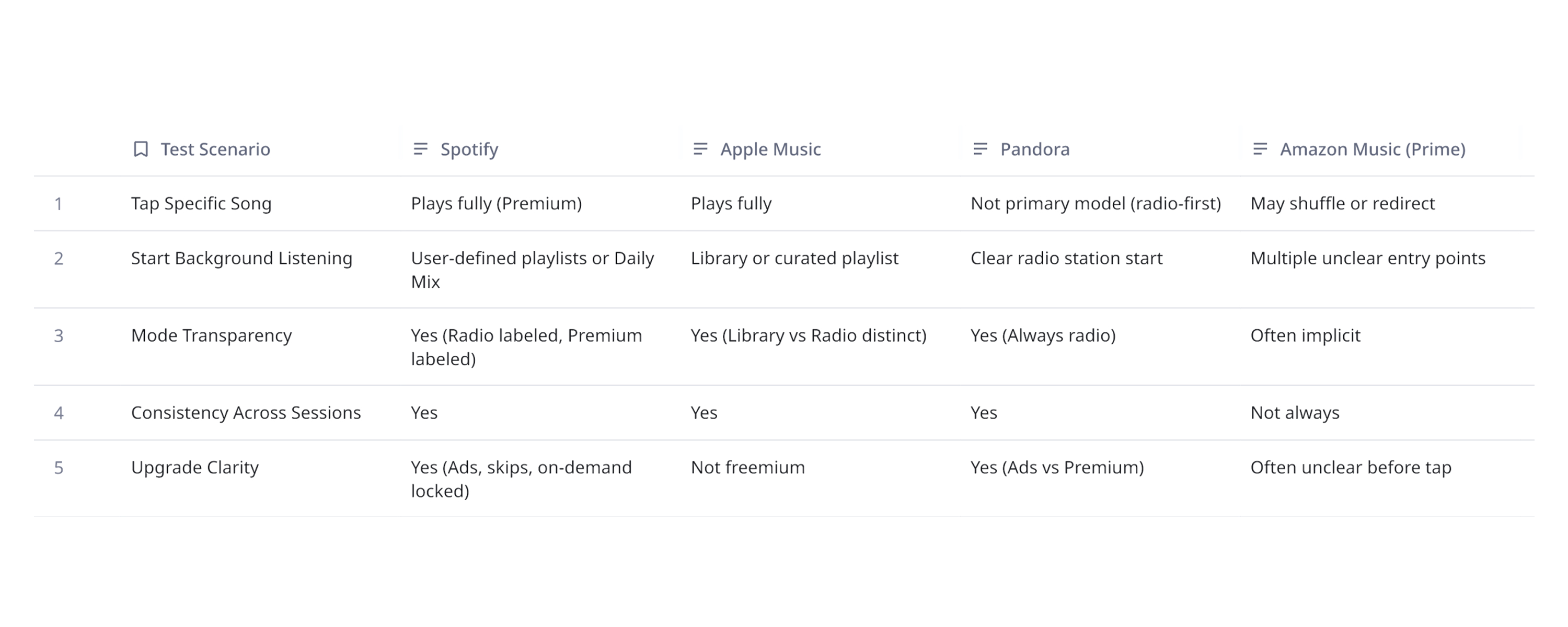
Habit formation depends on predictable intent-to-outcome mapping.
Spotify
• Tap a song → plays the selected track (Premium)
• Radio mode is clearly labeled
• Playback rules remain consistent
Apple Music
• Library-first ownership model
• On-demand playback is consistent
• Listening modes do not shift silently
Pandora
• Radio-first architecture
• Users expect algorithmic sequencing
• Minimal playback ambiguity
Amazon Music (Prime)
• Tap behavior may change by context
• Listening mode is often implicit
• Intent does not always equal outcome
No 3Where the Loop Breaks
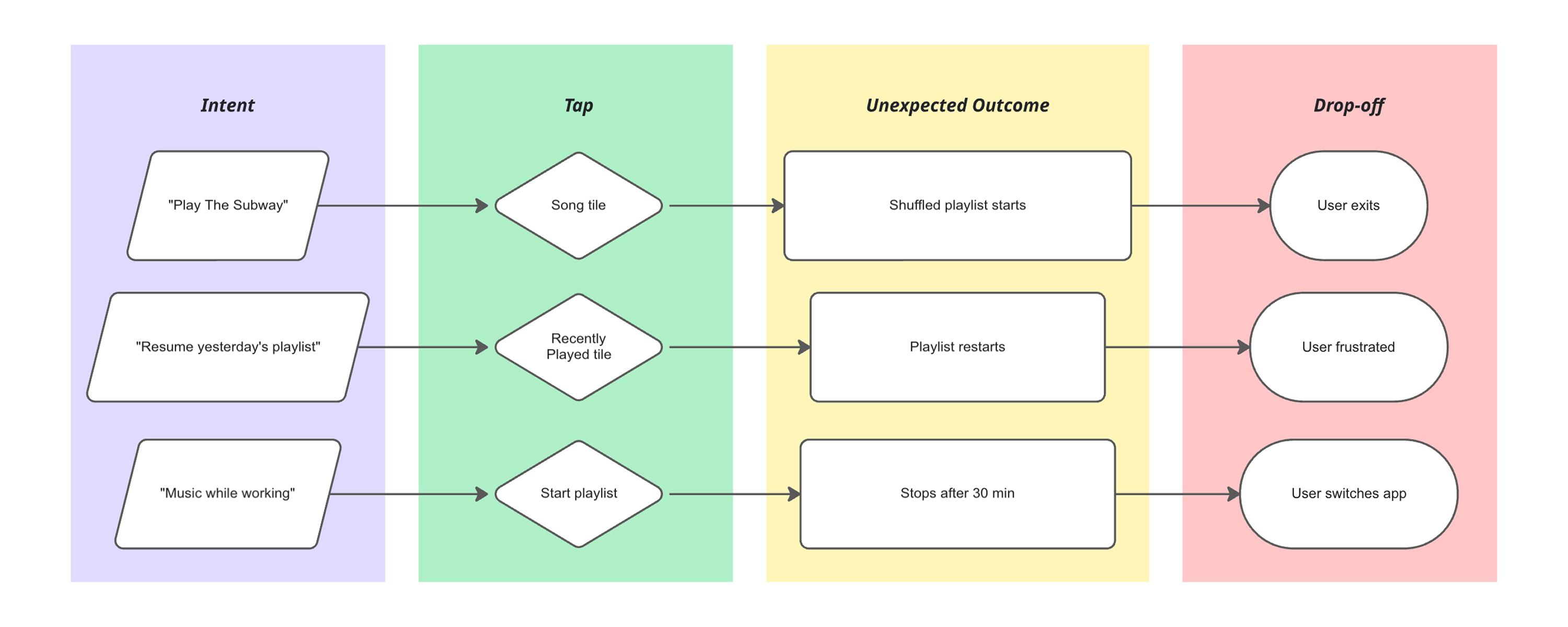
The breakdown occurs between user intent and system response.
Across direct play, recently played, and background listening, the same tap can trigger different playback behaviors.
When outcomes shift unpredictably, reinforcement fails — and habit formation collapses before it can stabilize.
No 4Behavioral Ownership Gap
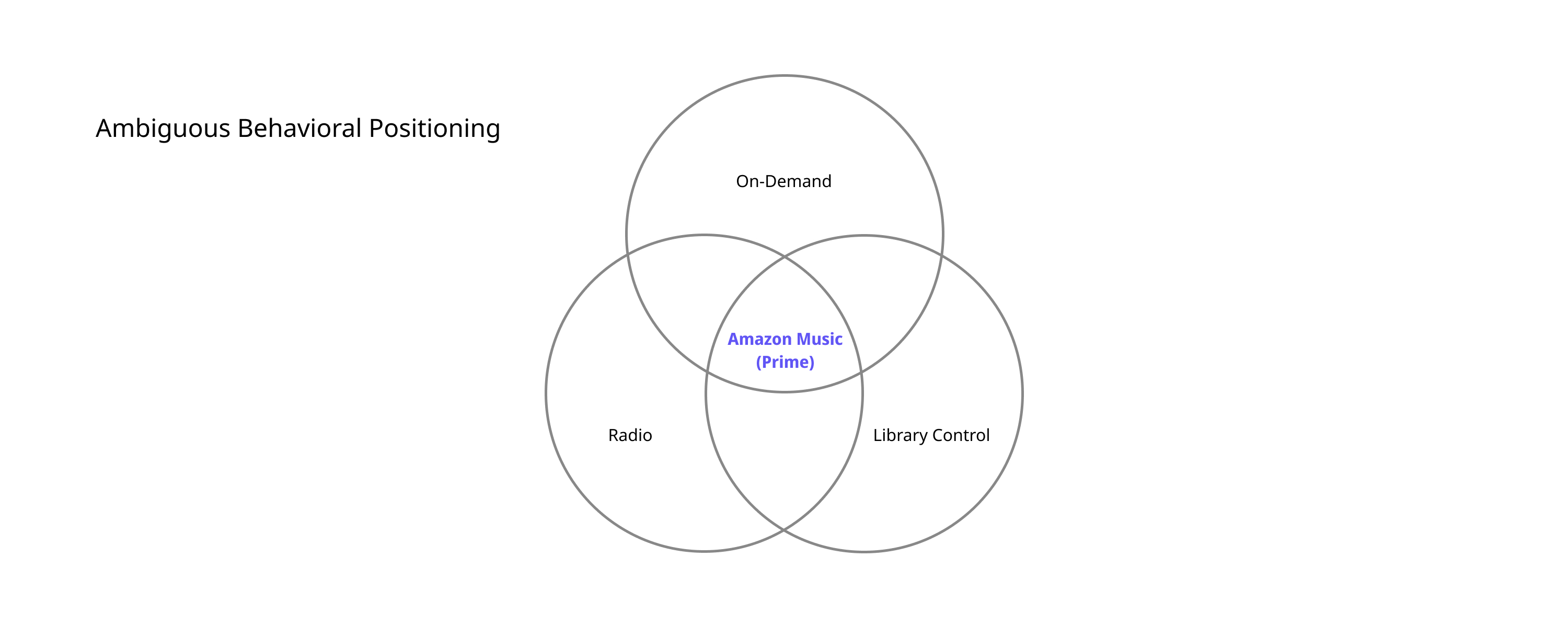
Amazon Music does not lack capability — it lacks a clearly defined listening model.
Spotify reinforces on-demand control.
Apple Music reinforces library ownership.
Pandora reinforces radio-first sequencing.
Amazon Prime combines elements of all three without clearly signaling which model is active.
No 5System Architecture Proposal
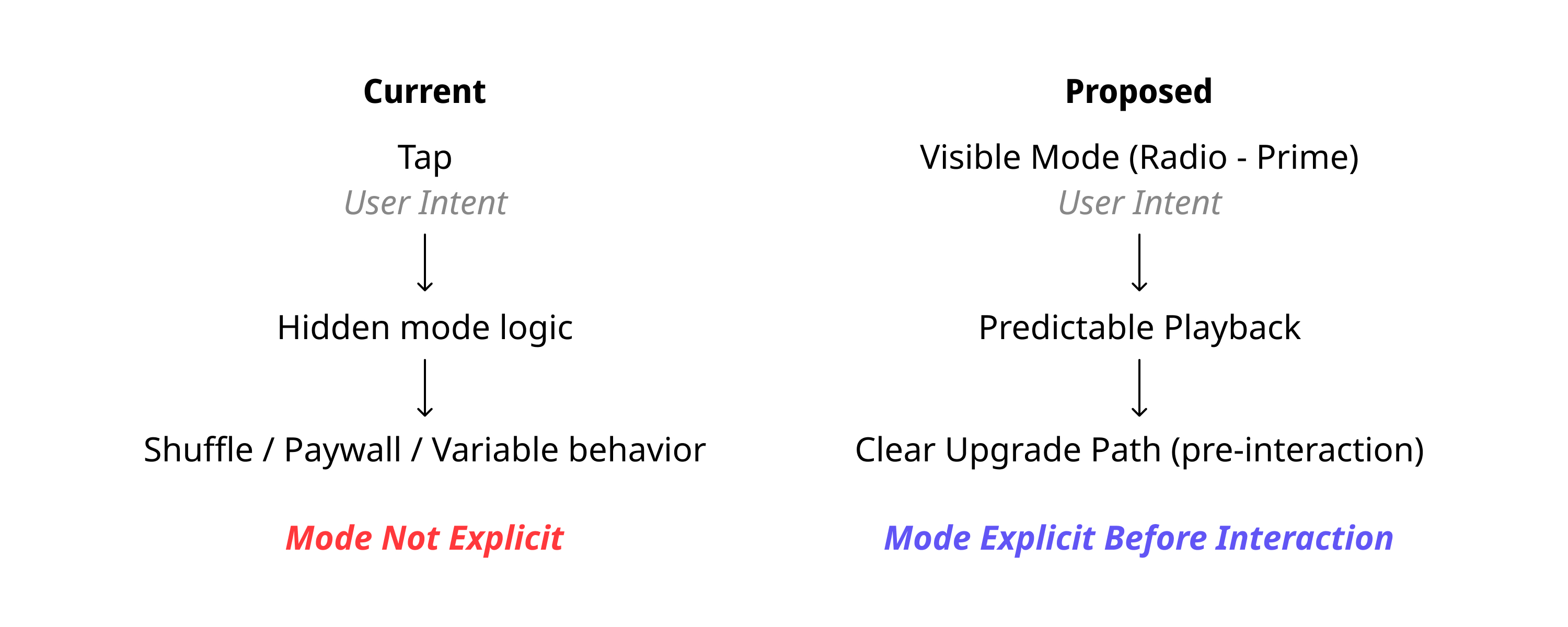
The issue is not feature limitation — it is unclear playback architecture.
Prime currently blends on-demand and radio logic without clearly signaling which model governs interaction.
A defined listening architecture restores predictability before any UI refinement.
No 6UX Reframe
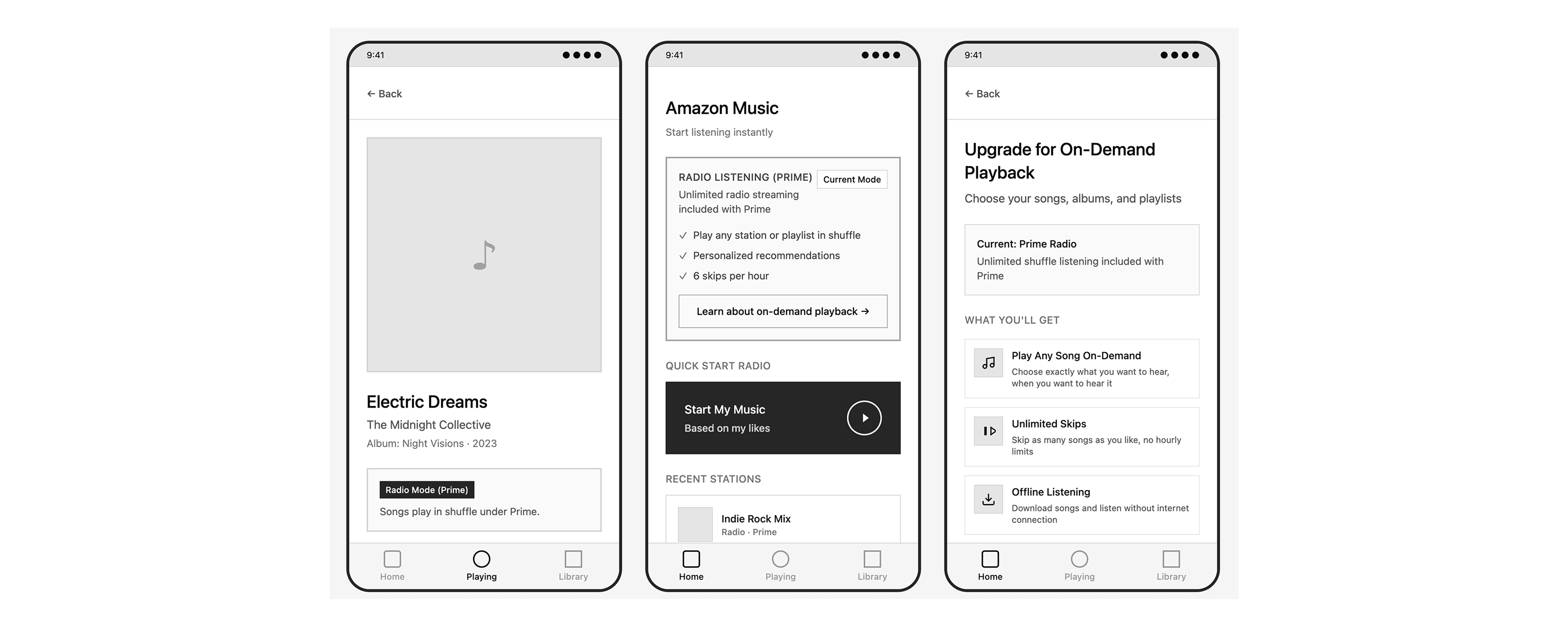
Predictability requires explicit behavioral signaling within the interface.
UX Principles:
• Define Prime as radio-first behavior
• Display playback mode before interaction
• Maintain consistent tap outcomes
• Present upgrade value before interruption
No 7Prototype Validation
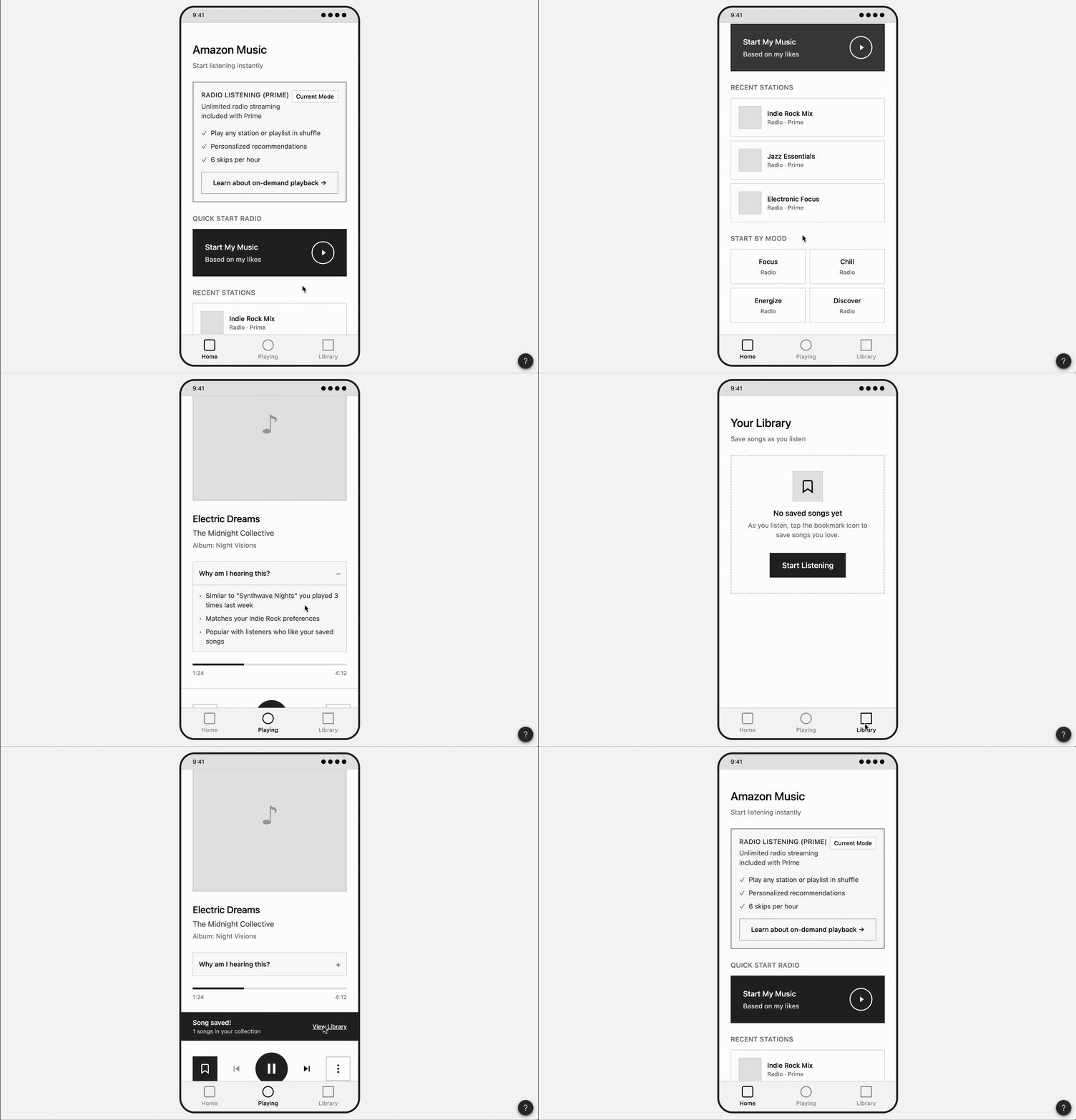
The prototype demonstrates explicit playback mode signaling before interaction.
Tap behavior remains consistent, and upgrade value is communicated without interrupting listening.
The result is predictable intent fulfillment — enabling habit formation through clarity.
No 8Process Note
AI tools were used to expand competitive analysis and explore alternative behavioral models. Final synthesis, framing, and product decisions were human-led.
View research notes & structured exploration →